

by Jeffrey BuschWith hard-won LGBTQ+ rights under attack and transgender young people being targeted by cruel state laws and White House policies, isn’t it frivolous to dance?
I grew up in Wilton. When I was young, I could not have imagined a Pride celebration here, or even being part of something called Wilton Pride myself. Now, when I see LGBTQ+ people dancing together at our events, I think back to when I was a gay kid, trying to figure out where I fit in. I wonder what it would have meant to me then to see people like me dancing openly in my hometown.
I was only six years old when police raided the crowded Stonewall Inn in New York City. I didn’t know then that the bar even existed, let alone that it had a dance floor. But after years of police harassment, people fought back that night and in the days that followed. Their resistance helped change what was possible for my life. They had gone out to meet friends and dance, and police came through the door. I get to dance openly in my hometown without expecting that to happen. That’s something I don’t want to take for granted.
I came of age as AIDS devastated the LGBTQ community. I remember the fear and grief of those years, and the determination of heroes who stood up and refused to let their friends face the crisis alone. The LGBTQ journalist and activist Dan Savage described people burying friends in the morning, protesting in the afternoon, and still dancing at night. “The dance kept us in the fight because it was the dance we were fighting for.”
“The dance kept us in the fight because it was the dance we were fighting for.”
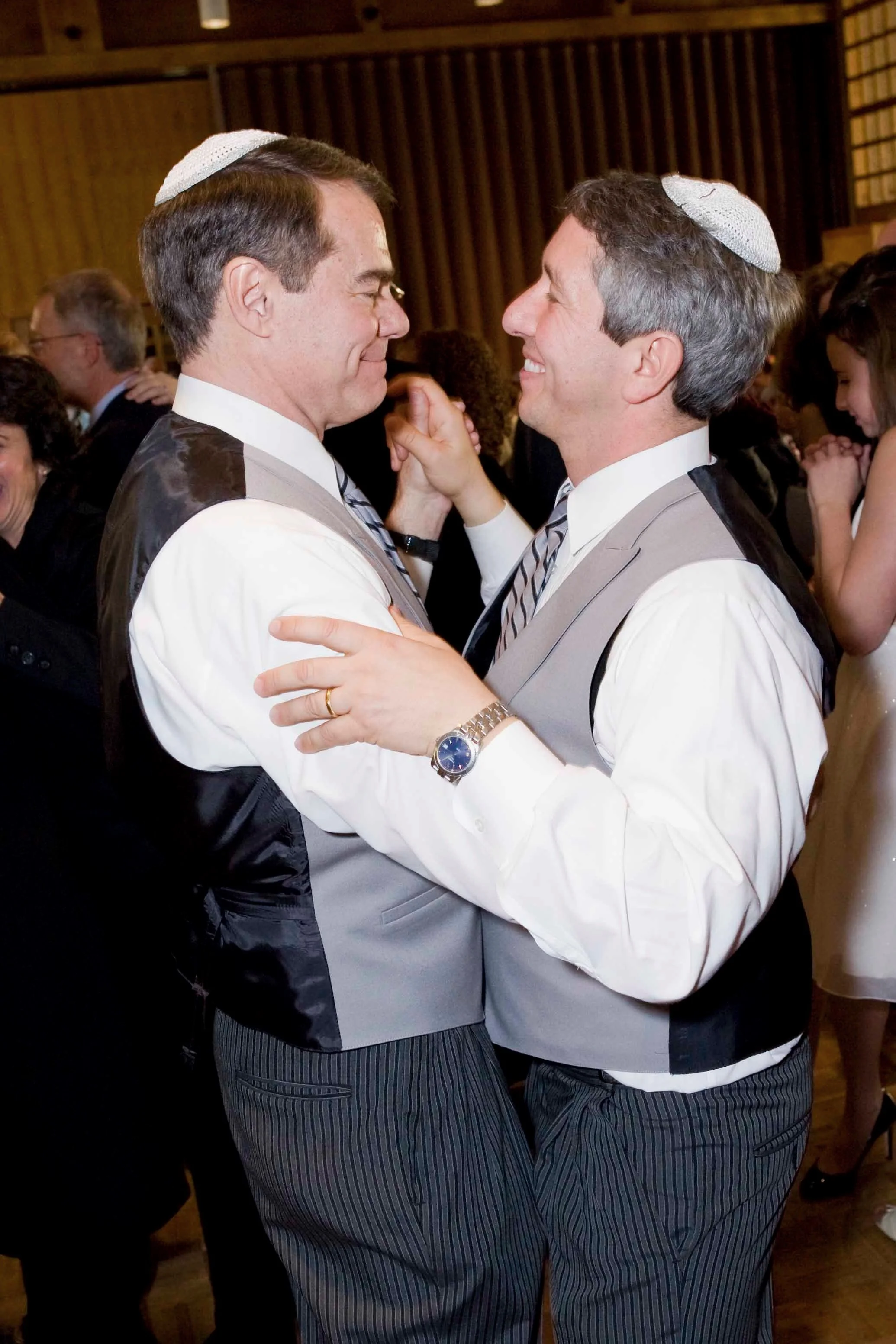
My husband Stephen and I were among the same-sex couples who sued Connecticut for the right to marry. We, along with six other couples, filed suit in 2004 and, after a long legal fight, won in 2008. The next year, surrounded by over 200 friends and family members, we took our first dance as husbands. We chose “Married,” from Cabaret, a song about how much the world can change because of that one little word. I can still feel that dance in my body. After fighting for the right to call each other husbands, there we were, waltzing together in front of everyone we loved. Dancing with Stephen in that moment touched something that words couldn’t even begin to express.
On Wednesday nights, I square dance with the Square Bears at the Congregational Church. Most of the dancers are older than I am, and straight. They know I’m gay. I suspect some of us vote very differently, but we don’t discuss politics. Square dancing requires us to reach for one another’s hands. Sometimes, when there aren’t enough men, women take the men’s roles and wear signs around their necks that say “man.” I smile at how matter-of-factly everyone accepts that. We’re here to dance.
When I returned to Square Bears after being away this summer, people gathered around to ask how I’d been, how my family was, and to welcome me back. I was moved. These were people I sometimes catch myself thinking of as “them,” and they were glad to see me. I don’t know where that connection might lead. But I believe connection is an essential part of how change happens, and dancing gives us a place to begin.
“...I believe connection is an essential part of how change happens, and dancing gives us a place to begin. ”
I was glad they came over to welcome me back. At Wilton Pride events, I want to do the same for someone who has come alone or doesn’t know anyone yet, or isn't sure that they belong.
So I dance for the people who made this gathering possible. I dance for those we lost, and for those who are here. I dance because I want young people growing up in Wilton - whether gay, bi, trans, queer, or still figuring things out - to see us here and know that they too belong.
And if someone is standing at the edge of the dance floor, we invite them in.
—------------
(Jeffrey Busch is a member of the Wilton Pride Board and a Wilton Town Justice of the Peace.)
